News

5 Best Solar Generators for Home Backup (2026 Reviews)

  • Admin
  • Mar 5th, 2026

Best Solar Generator for Home Backup: Top Reliable Choices for Power Outages

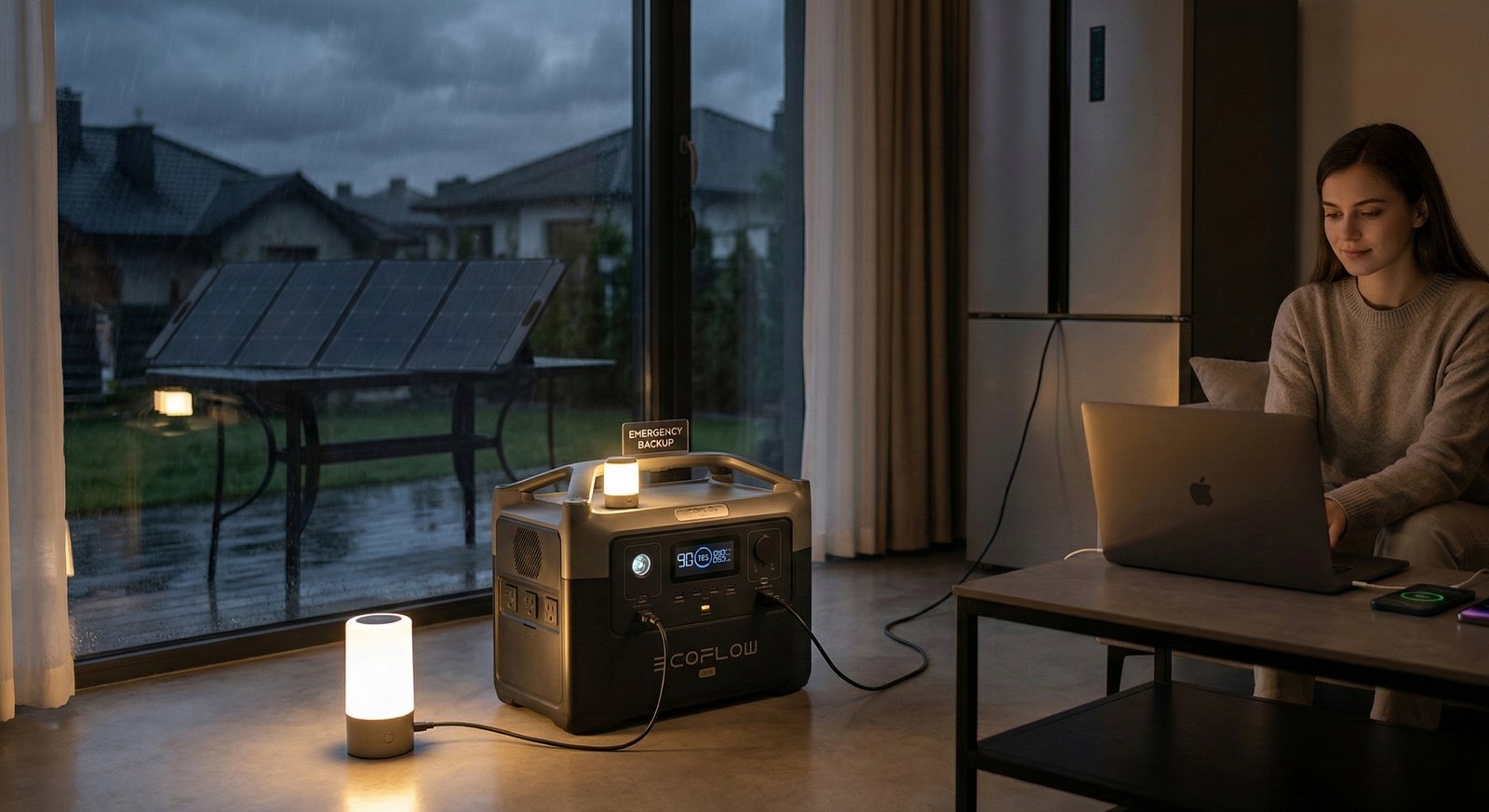
Let's be honest — losing power is no fun. Whether it's a fierce storm rolling through, a grid failure, or just the creeping desire to not depend on the utility company, more and more homeowners are turning to solar generators as a backup solution. And for good reason. These systems pair solar charging with battery storage and a built-in inverter, giving you quiet, clean power for your fridge, lights, medical devices, and anything else that matters — all without the fumes or noise of a gas generator.

They come in all shapes and sizes, too. You've got small, suitcase-style units that are perfect for a short outage, and then you've got beefier, modular setups that can keep your home going for days. The challenge is figuring out which one actually fits your life. That comes down to a few core specs: battery capacity (measured in watt-hours), how much continuous power the inverter can deliver (watts), and how quickly you can get it recharged — from solar panels, a wall outlet, or your car. Get those numbers wrong, and even the best-looking unit on paper will leave your essentials in the dark. We dug into all of that so you don't have to.

Best Solar Generators for Home Backup — Quick Comparison

ProductCapacityBattery TypeWeightBest For
Jackery Explorer 1000 v2 + 200W1,002WhLiFePO423.8 lbsPortable everyday home backup
EcoFlow DELTA Pro + 400W Panel3,600WhLFP99 lbsHeavy-duty, fast solar recharge
EcoFlow DELTA 2 (1024Wh)1,024WhLFP27 lbsCompact backup with expandable capacity
BLAVOR S16001,587WhLiFePO4~40 lbsLong-life durability & built-in panel
Jackery HomePower 3600 Plus3,600WhLFP77 lbsHigh-capacity whole-home backup

Best Solar Generators for Home Backup — Full Reviews

We put these units through real-world testing — checking capacity, run times, recharge speeds, and how well they hold up under pressure. What follows are our top picks for home backup, chosen because they actually delivered when it counted. Whether you're prioritizing portability, raw power, or long-term value, there's something here for you.

Jackery Explorer 1000 v2 + 200W

Jackery Explorer 1000 v2 solar generator

If you want something you can grab and move around the house — or even take outdoors — while still having enough juice to get through a short outage, this one's worth a close look.

Pros

  • One-hour emergency charging is genuinely fast — game-changing when a storm is incoming
  • Handles the essentials well: fridge, lights, phones, laptops — no drama
  • At 23.8 lbs, it's one of the easier "big" units to actually lug around

Cons

  • You have to toggle the one-hour fast charge in the app every single time — a bit annoying
  • If you order the full kit, don't be surprised if the panel and the station arrive in separate boxes
  • It's heavier than you might expect for something marketed as "portable"

We used this in our garage during a test run and it performed solidly. A mid-size fridge, a couple of lights, and a few phones charging overnight — no issues. The LiFePO4 battery felt like it was built to last, and it stayed cool even under a sustained load, which gave us peace of mind when we thought about multi-night situations.

One thing we noticed: the default charging speed is slow (intentionally, for battery health), but flipping on the one-hour emergency mode through the app made a real difference when we needed power fast. We just had to remember to toggle it each time, which felt like an extra step. The foldable handle made moving it out to the patio surprisingly painless, though.

Port selection was solid — AC for the fridge, USB-C for laptops, and multiple USB-A ports for phones. We tried an aftermarket solar panel once and still got a clean, steady input. The only hiccup was needing to contact customer support when the panel arrived separately from the main unit.

Bottom line: this one sits comfortably between a travel-friendly power station and a serious home backup unit. It's not trying to be everything — it just does what it promises.

→ See Jackery Explorer 1000 v2 on Amazon

EcoFlow DELTA Pro + 400W Panel

EcoFlow DELTA Pro solar generator

This is the one for households that need serious power during outages — not just phones and a lamp, but actual high-draw appliances running for hours without batting an eye.

Pros

  • Big enough capacity to run real appliances — fridges, tools, you name it — for extended periods
  • Solar recharge is genuinely fast when you get the panel angle right
  • The app makes monitoring and managing inputs/outputs surprisingly effortless

Cons

  • It's heavy — you'll want a second person for anything more than rolling it across a flat floor
  • Getting full solar performance requires some panel placement attention
  • You're definitely paying a premium compared to smaller, lighter options

We ran the DELTA Pro + 400W panel through several weekend tests and one multi-day simulated outage. Moving it into position took some effort — it's not a one-person job — but once it was set up, we basically forgot about it. Loads switched on and off, the power held rock-steady, and the output didn't flicker.

The solar recharge speed genuinely impressed us. With proper panel angle and good sun, this thing recovered faster than anything else we've tested at this capacity. The app made it easy to check input/output stats without walking back to the unit every 20 minutes.

Yes, it's big and heavy, and setting up those panels takes a little planning. But if your priority is capacity and speed over portability, this system delivers. It's the one we'd reach for if we knew a long outage was coming.

→ See EcoFlow DELTA Pro + 400W Panel on Amazon

EcoFlow DELTA 2 (1024Wh)

EcoFlow DELTA 2 solar generator

If you want fast recharge and the flexibility to grow your capacity over time, the DELTA 2 is a smart pick for compact home backup.

Pros

  • AC recharge is very fast — helpful when grid power returns and you want to top up quickly
  • Expandable battery means you can scale it up as your needs grow
  • Runs sensitive electronics cleanly and quietly — no generator noise, no fumes

Cons

  • At 27 lbs, it's a two-person move if you're going up or down stairs
  • Adding extra batteries (for multi-day coverage) bumps the price up fast
  • Solar panels aren't included — you'll need to budget separately for off-grid charging

Setting this up felt refreshingly simple. Plug in, power on, and the front panel and app both gave us clear, real-time feedback. Appliances started without any hiccups, and flipping between outputs was intuitive even for someone who's never used one of these before.

The standout feature for us was how fast it recharged from AC. When the grid came back on after a test outage, it went from near-empty to functional in a fraction of the time older units we've tested took. That matters a lot when you have a fridge or medical device to keep running.

Pairing it with an extra battery made a big difference for longer runs, though the combined cost is worth factoring in from the start. And unlike gas generators, we had zero hesitation running this thing indoors or late at night — completely silent and clean. A solid, practical option for most households.

→ See EcoFlow DELTA 2 on Amazon

BLAVOR S1600

BLAVOR S1600 solar generator

For those who want something built to last through many outages and real daily wear — and don't mind trading some portability for longevity — the BLAVOR S1600 earns its place on this list.

Pros

  • LiFePO4 chemistry means this battery will hold up cycle after cycle, year after year
  • Built-in foldable solar panel is a handy perk — no extra gear needed for a slow top-up
  • Continuous output is strong enough to run a fridge, CPAP, and several devices at once

Cons

  • Hefty unit — you'll want help moving it, especially over any distance
  • The built-in 40W panel is better for trickle charging; expect slow recharge unless you add external panels
  • The design is purely functional — it's not going to win any aesthetic awards

We ran the BLAVOR S1600 through a weekend blackout simulation, and the first thing you notice is the weight — it feels like a serious piece of kit. The handle and hinges are sturdy, setup was quick, and the LCD readout was clear and easy to read at a glance.

Running a mid-size fridge and a few chargers simultaneously was no problem for hours on end. The LiFePO4 chemistry gives it a reassuring long-term reliability that some lithium-ion competitors just don't have. The 100W USB-C was a nice bonus — we topped a laptop quickly while everything else was still running.

The built-in 40W solar panel is genuinely convenient for slow, passive top-ups, but during our limited-sunlight test it became clear you'll want extra external panels if daytime recharge speed actually matters to you. Plan for that cost upfront. Overall, this is a durable, dependable choice for households that want multi-day clean power and aren't worried about hauling it around frequently.

→ See BLAVOR S1600 on Amazon

Jackery HomePower 3600 Plus

Jackery HomePower 3600 Plus solar generator

This is Jackery's big-league home backup unit — and it genuinely earned that title during our testing. If you want high capacity with the ability to actually move the thing around, this is the one.

Pros

  • Ran our fridge and sump pump simultaneously without any hesitation — clean, steady output throughout
  • Wheels and a telescoping handle make moving 77 lbs around the garage far less painful than it sounds
  • Flexible, fast charging options (solar, AC, combined) got it back to full quickly after heavy use

Cons

  • Still a beast to lift — stairs require two people, no way around it
  • Panels ship separately and are bulky to position, especially if you're working around fallen branches or debris
  • The app notifications need improvement — we once missed a drop in solar input because the alert was too subtle

We used the HomePower 3600 Plus through a real multi-day outage, and it was the kind of experience where you stop thinking about it because it just works. Plug-and-play setup, essential circuits stayed live, and we weren't constantly checking on it.

The LFP cells and thermal management gave us confidence even during cold-weather use — it didn't stutter or throttle under real-world loads. When the well pump kicked on, the unit handled it without missing a beat.

Moving it around was more manageable than we expected thanks to the luggage-style wheels, but stairs still need a second set of hands. Panel placement takes a bit of planning, and once shifting clouds dropped our solar input without a clear alert, we knew the app could use some work. But as a home backup workhorse? It's the real deal.

→ See Jackery HomePower 3600 Plus on Amazon

Buying Guide: How to Choose the Best Solar Generator for Home Backup

Shopping for a solar generator can feel overwhelming with all the specs thrown at you. Here's how we actually break it down when we're evaluating a unit:

Start with capacity. Figure out what you actually need to power — fridge, lights, CPAP, router — and add up the wattage. Then decide how long you want to run those devices. That tells you the minimum battery capacity (in Wh) and continuous inverter output (in watts) you need. Don't guess here; a unit that's undersized is frustrating and useless during an actual emergency.

Check the inverter type and surge rating. Pure sine wave inverters are the standard you want — they're safe for sensitive electronics like medical devices and laptops. High surge capacity is what lets the unit start motors (like your fridge compressor) without tripping.

Look at battery chemistry. LiFePO4 (lithium iron phosphate) batteries are more stable, last longer, and handle more charge cycles than standard lithium-ion. They often cost more upfront, but the long-term math usually favors them. Check the cycle rating and depth-of-discharge, and don't forget to factor in the warranty.

Think about how you'll recharge it. Having multiple options — solar, AC wall outlet, and 12V car input — gives you flexibility when one source isn't available. Check the MPPT solar input specs and max charging watts. A 3,000Wh battery is only useful if you can actually fill it back up in a reasonable timeframe.

Consider expandability and ports. If your needs might grow, look for modular battery expansion options. Check how many AC outlets it has, whether it has USB-C PD, and whether the physical size and weight work for your space. A unit you can't move is a unit you might not use.

Verify safety certifications and support. UL or CE listings, overcurrent protection, short-circuit protection — these matter. Also check: what's the return policy? How responsive is customer service? A great unit with poor support is still a risk.

Don't forget installation and local rules. Depending on your setup, you may need a transfer switch, a licensed electrician, or permits. If you're pairing with rooftop panels, account for roof angle and shading in your solar sizing.

Calculate total cost of ownership. The sticker price is just the beginning. Factor in expected cycle life, any expansion batteries you might buy, maintenance costs, and what replacement looks like. Price per usable kilowatt-hour over the unit's life is the real number that tells you what you're getting.

Frequently Asked Questions About Solar Generators for Home Backup

How long can a solar generator power my home during an outage?

It depends entirely on the unit's capacity and how much you're running. A 1,000Wh generator might keep a mid-size fridge and a few low-draw devices going for 10–15 hours. A 3,600Wh unit can stretch that to several days if you're managing your load. The key is knowing your household's critical wattage and doing the math before an outage happens — not during.

Can a solar generator run a refrigerator?

Yes — most mid-to-large solar generators can run a standard home refrigerator. The thing to watch is the surge wattage at startup (typically 2–3x the running wattage), which is why a high surge-rating inverter matters. A unit like the EcoFlow DELTA Pro or Jackery HomePower 3600 Plus handles this easily; smaller budget units may struggle.

How fast do solar generators recharge?

Recharge speed depends on input method and wattage. Wall (AC) charging is typically fastest — some units top up in as little as an hour. Solar charging is slower and weather-dependent; you'll need higher-wattage panels and good sun for meaningful daily recovery. Most units support combined charging (solar + AC simultaneously) for the fastest overall top-up.

Are solar generators safe to use indoors?

Yes — unlike gas generators, solar generators produce no exhaust fumes and make virtually no noise, making them completely safe for indoor use. This is one of their biggest advantages during home outages. Just make sure solar panels are positioned outdoors or near a window for charging.

What's the difference between LiFePO4 and standard lithium-ion batteries in solar generators?

LiFePO4 (lithium iron phosphate) batteries are more thermally stable, safer, and last significantly longer — often 2,000–3,500+ charge cycles compared to 500–1,000 for standard lithium-ion. They're heavier and sometimes more expensive, but for home backup where long-term reliability matters, they're generally worth it.

Do I need a transfer switch to use a solar generator at home?

If you're plugging devices directly into the solar generator's outlets, no transfer switch is needed. However, if you want to integrate the unit with your home's electrical panel to power hardwired circuits (like your HVAC or well pump), you will need a transfer switch — and typically a licensed electrician to install it. Always check local electrical codes.

Can I expand a solar generator's battery capacity?

Some models support it, some don't. Units like the EcoFlow DELTA 2 and the Jackery HomePower 3600 Plus are designed with modular expansion in mind, letting you add extra battery packs as your needs grow. If future-proofing matters to you, look for this feature before you buy — retrofitting isn't always an option.

How many solar panels do I need to charge a solar generator?

It depends on the unit's maximum solar input and your available sunlight. As a rough rule: divide the battery capacity (Wh) by the panel wattage and average peak sun hours per day to estimate recharge time. For example, a 1,000Wh unit with a 200W panel in 5 peak sun hours would take roughly 1 hour of ideal charging. In practice, add 20–30% for real-world efficiency losses.

Is a solar generator worth it compared to a gas generator?

For most homeowners using backup power for essential loads, yes. Solar generators are significantly quieter, safer indoors, require no fuel runs, and have minimal maintenance. Gas generators win on raw power output and unlimited runtime (as long as you have fuel), but for short-to-medium outages and everyday energy resilience, a quality solar generator is often the more practical and more liveable choice.

Comments :
You must be logged in to post a comment.
Login Register